The Collegium Ignimortium
FACTION PROFILE
Founded: Estimated late 12th–early 13th Century (Pre-Tor Apex within Tor Mountain)
Governance: Hierarchical Ecclesiastic-Industrial Order (Centralized doctrine, decentralized operations)
Spokesman/Public Information Officer/Figurehead: The Iron Prophet (Last known figurehead, status unknown)
Primary Function/Purpose: Theological-Industrial Transformation of the Human Form; Fusion of Flesh, Machine, and Faith
Estimated Numbers: Unknown; scattered cells estimated in the tens of thousands across Vitaveus
Republic Influence: Very Low (Officially); Moderate (Unacknowledged, indirect influence)
Republic Disposition: Loyalist (Self-perceived); Suspected Heretical (External perception varies)
Citizenry Reputation: Unknown, feared in rumor; largely considered myth, cult, or fringe sect
Military Strength: Unknown; small but highly specialized augmented forces
Seat of Operations: Formerly Tor Mountain Facility; current operations unknown (believed decentralized)
Common Ranks/Titles
The Mason (Mythic/Divine Figure — central to doctrine)
The Iron Prophet (The ideological name for Decus — Spiritual leader)
High Artificer
Forge Prelate
Sanctifier of Flame
Architect of Flesh
Iron Acolyte
Consecrated Vessel (Augmented initiate)
Penitent Construct (Failed or partially transformed subject)
Post-Torment State: Fragmented, scattered, but persistent
Presence in First Province: Unknown; suspected hidden operations near Tor ruins and beyond the Blight Line
History
The origins of the Collegium Ignimortium trace back to a time when the Republic stood unbroken and Tor was still a thriving capital of power, knowledge, and ambition. Emerging from obscure theological circles and experimental industrial sects, the Ignimortium formed around a singular, controversial interpretation of Decus’ divine will:
That mankind, in its current form, was unfinished.
Where the Church taught preservation of the soul and the Foundry perfected the world through industry, the Ignimorium sought to bridge both through a radical belief:
Flame purifies. Metal shapes. Man must be remade.
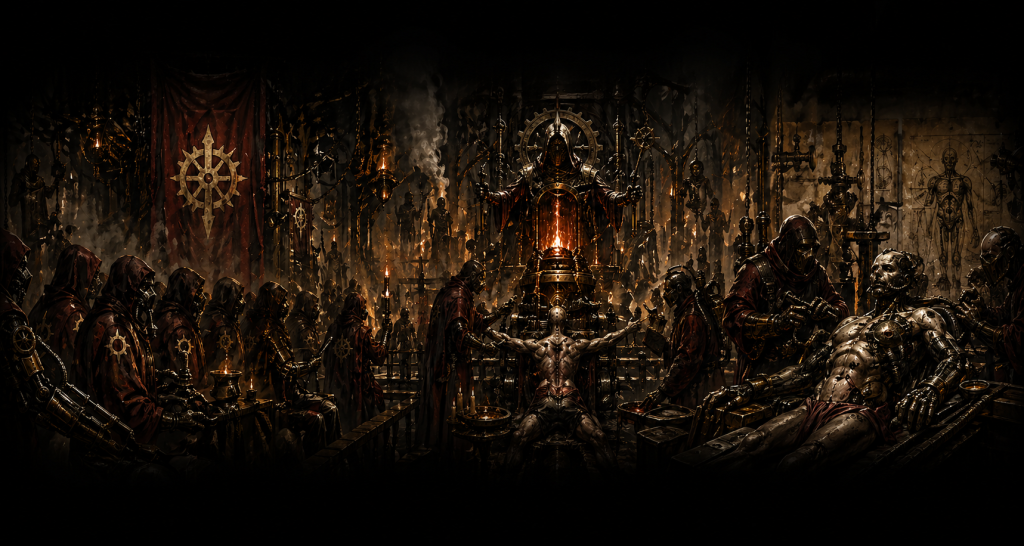
At its height, the Collegium operated its greatest facility deep within the mountain beneath Tor—a vast, shifting cathedral of machinery, ritual, and industry. Within this place, flesh and iron were brought together through disciplined process, sacred rites, and unwavering devotion.
The Ignimorium did not see their work as desecration.
They saw it as communion.
Machines were not tools—they were altars.
Augmentation was not mutilation—it was sanctification.
Transformation was not loss—it was ascension.
Within these halls, the Collegium pursued what they believed to be the next stage of human existence: a being refined through flame and shaped through iron, free of weakness, fear, and decay.
The Fall of Tor
When the Torment came, the Collegium faced a choice.
Many fled—taking fragments of knowledge, schematics, and doctrine with them, scattering across Vitaveus to continue their work in secrecy.
But not all abandoned the mountain.
Some remained.
These individuals sealed themselves within the Ignimorium’s great cathedral-factory, continuing their work in isolation from the outside world. Cut off from the Republic, the Church, and even their own scattered kin, their fate became unknown.
Rumors persist that the machinery beneath Tor never ceased its function.
That the Cathedral still shifts.
That the flame still burns.
Modern Times
In the present day, the Collegium Ignimorium exists not as a unified body, but as a fractured doctrine carried by hidden cells.
These cells operate quietly, often embedded within or alongside existing infrastructure—industrial, academic, or otherwise—gathering materials, knowledge, and suitable candidates for their work.
Their beliefs remain unchanged:
They do not see themselves as rebels.
They do not see themselves as heretics.
They see themselves as devout servants of Decus, pursuing a deeper truth others have failed to embrace.
Their relationship with the Republic is complex.
- The Republic Foundry is studied, respected, and quietly mirrored
- The Consortium is observed as intellectual kin, though restrained
- The Venerated Inquisition Corps remains a looming threat—yet not without contradiction
There are documented instances—rare, but persistent—where Ignimorium-crafted individuals or methods have been utilized in extreme circumstances by elements of the Republic, particularly in times of crisis where endurance and resilience outweighed doctrinal purity.
To the Ignimorium, such moments are not compromise.
They are confirmation.
Doctrine and Belief
At the heart of the Collegium lies an unwavering conviction:
Mankind is not yet worthy of what it was created to become.
The Ignimorium teaches that through suffering, discipline, and transformation, the flaws of the human form can be stripped away, leaving behind something stronger, more enduring, and closer to divine intent.
They believe they are not defying the will of Decus—
but completing it.
Reputation and Perception
To most of the Republic, the Ignimorium is little more than rumor.
A whispered name in industrial corridors.
A cautionary tale among laborers.
A forbidden topic in academic circles.
To those who have encountered their work directly, the perception is far less ambiguous.
They are seen as:
- Visionaries by a rare few
- Extremists by many
- Something far more unsettling by those who have looked too closely
Closing Understanding
The Collegium Ignimorium does not wage war against the Republic.
It does not seek to overthrow its structures.
Instead—
it works quietly, patiently, and with absolute conviction that the Republic, like mankind itself, is merely a foundation for something greater.
The Foundry builds the world.
The Inquisition guards it.
The Consortium studies it.
The Ignimorium seeks to refine what stands within it.
And in their certainty, they do not question whether they are right.
Only whether the world will be ready when their work is complete.